


Baby Development 0–6 Months: Playfully Fostering Sensory Development
In brief
- In the first few months, sensory development is key: seeing, feeling, hearing.
- Babies initially recognize strong light-dark contrasts above all else.
- Less stimuli are more – clarity and repetition provide security.
- It's not about early promotion, but about loving guidance.
The first six months of life are a particularly sensitive and formative time. Babies perceive their world with all their senses from the very beginning. Light, contrasts, sounds, touches and movements are processed step by step and linked together in the brain.
During this phase, important foundations are laid for perception, motor skills, emotional security and later learning. Gentle play impulses can meaningfully accompany your baby – without overstimulation, but with clarity, repetition and security.
What happens between 0 and 6 months?
In the first months of life, sensory development is key. Babies learn to observe their surroundings, categorize stimuli and recognize initial connections.
Typical developmental steps in this phase are:
- Perceiving light-dark contrasts
- Fixating on faces and simple shapes
- Reacting to voices and sounds
- First targeted grasping movements
- Discovering one's own hands
- Developing body awareness and basic trust
Movements gradually become more controlled, attention span slowly increases, and each repetition helps to strengthen neural connections. Learning at this age occurs primarily through seeing, feeling, and repetition.
How learning toys meaningfully support development
Learning toys for babies aged 0–6 months should be deliberately simple, clearly designed, and sensorially valuable. Fewer stimuli allow your baby to focus on individual elements and perceive them intensely.
Well-chosen baby learning toys support:
- visual perception
- the sense of touch
- first grasping movements
- hand-eye coordination
- calm, focused play phases
Instead of entertainment, experiencing is the focus at this age. Recurring patterns, clear shapes, and different materials help babies develop security and orientation.
Recommendation for 0–6 months: Black and White Contrasts
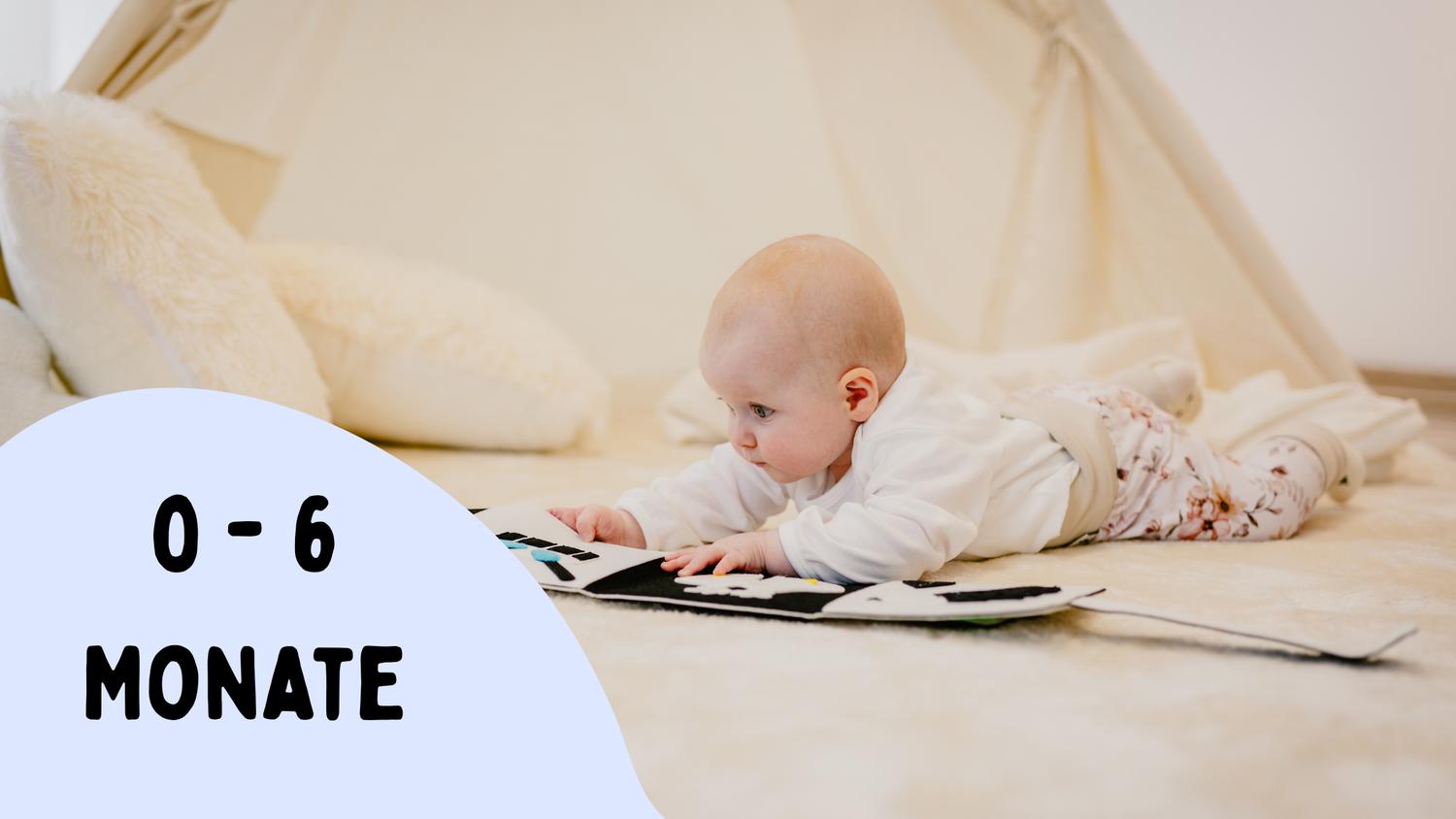
In the first few months of life, babies can particularly well recognize strong contrasts. Therefore, our black and white learning toys are ideal for promoting early sensory development.
They offer:
- clear black and white contrasts to support visual development
- simple, easily recognizable shapes
- soft materials for first tactile experiences
- calm, age-appropriate play impulses
This helps your baby to focus their gaze, perceive differences, and make their first conscious visual experiences – without overstimulating them. We explain why contrasts work so well at this age in What Newborns Really See.
Simple Play Ideas for Babies from 0–6 Months
1. Visual discovery time. Hold a black and white element about 20–30 cm away in your baby's field of vision. Your baby can look at the contrasts and train their eye movements. Promotes: visual sense, attention, concentration.
2. First gripping experiences. Gently guide a soft element to their hands. Grasping, releasing, and re-touching support fine motor skills. Promotes: hand-eye coordination, muscle strength, body awareness.
3. Calm moments of perception. Slow movement of a contrasting element and gentle talking create relaxed play moments. Promotes: sensory processing, emotional development, basic trust.
4. Tummy time with a focal point. A high-contrast book in their line of sight motivates your baby to lift their head – perfect preparation for rolling and crawling. Read more in 6 Reasons Why Tummy Time Is Important. Promotes: neck and back muscles, perception.
The Most Important Thing at the End
In the first few months, it's not about early promotion, but about loving guidance. Calm play impulses, repetition, and security create the basis for all further learning.
And don't worry: you don't have to "do everything right". Your closeness, your voice, and your face are the most valuable things your baby needs at this time.
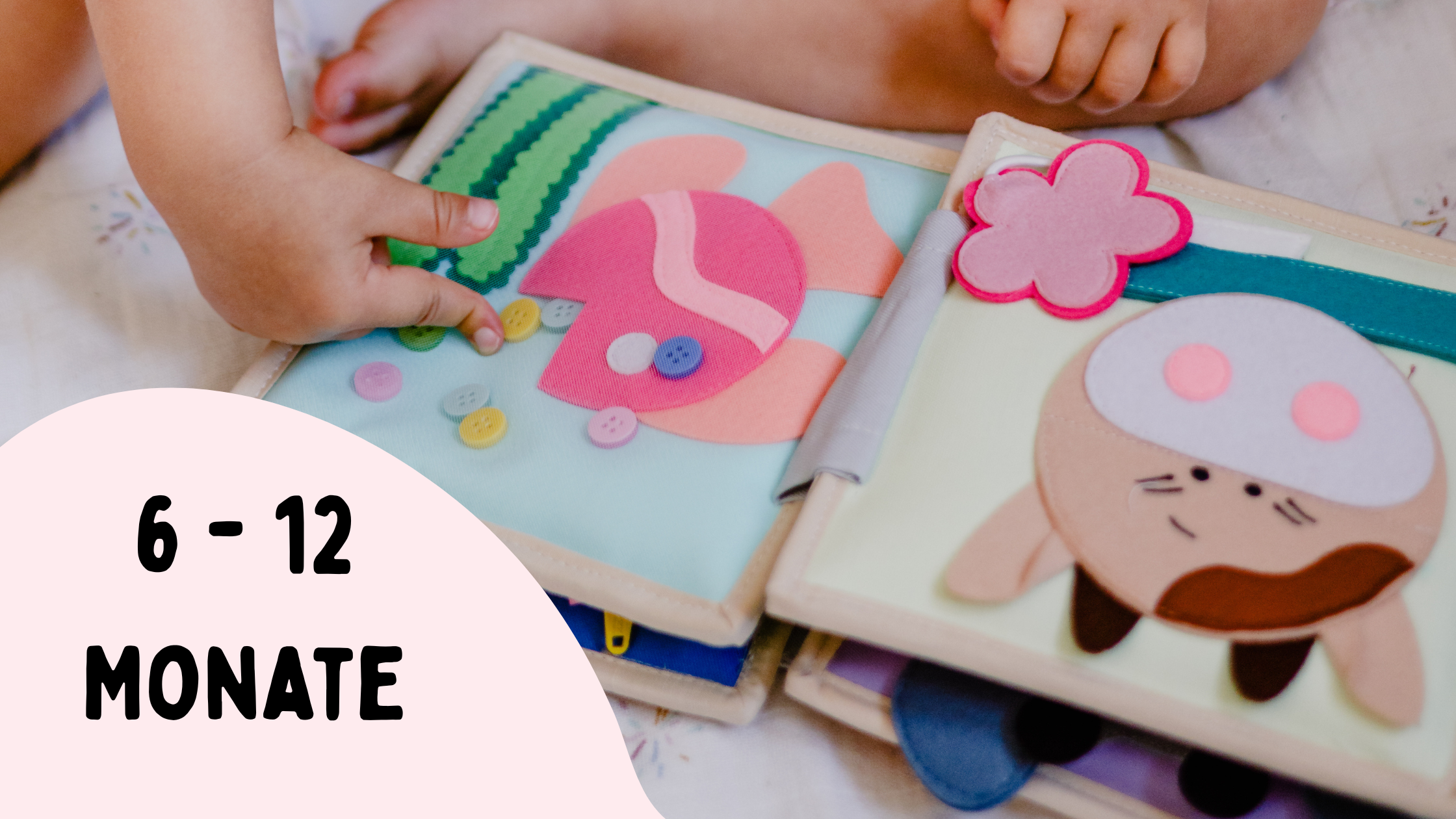
Read what happens next in Baby Development 6–12 Months.


Leave a comment
All comments are moderated before being published.
This site is protected by hCaptcha and the hCaptcha Privacy Policy and Terms of Service apply.